Technical SEO in Atlanta for the problems you cannot see
Great content on a site Google struggles to crawl, render or index is content nobody reads. Technical SEO removes the ceiling everything else is pressing against.
The rankings ceiling is usually technical
Technical SEO in Atlanta is the least visible work we do and reliably the highest-leverage. It is the ceiling every other effort is pressing against.
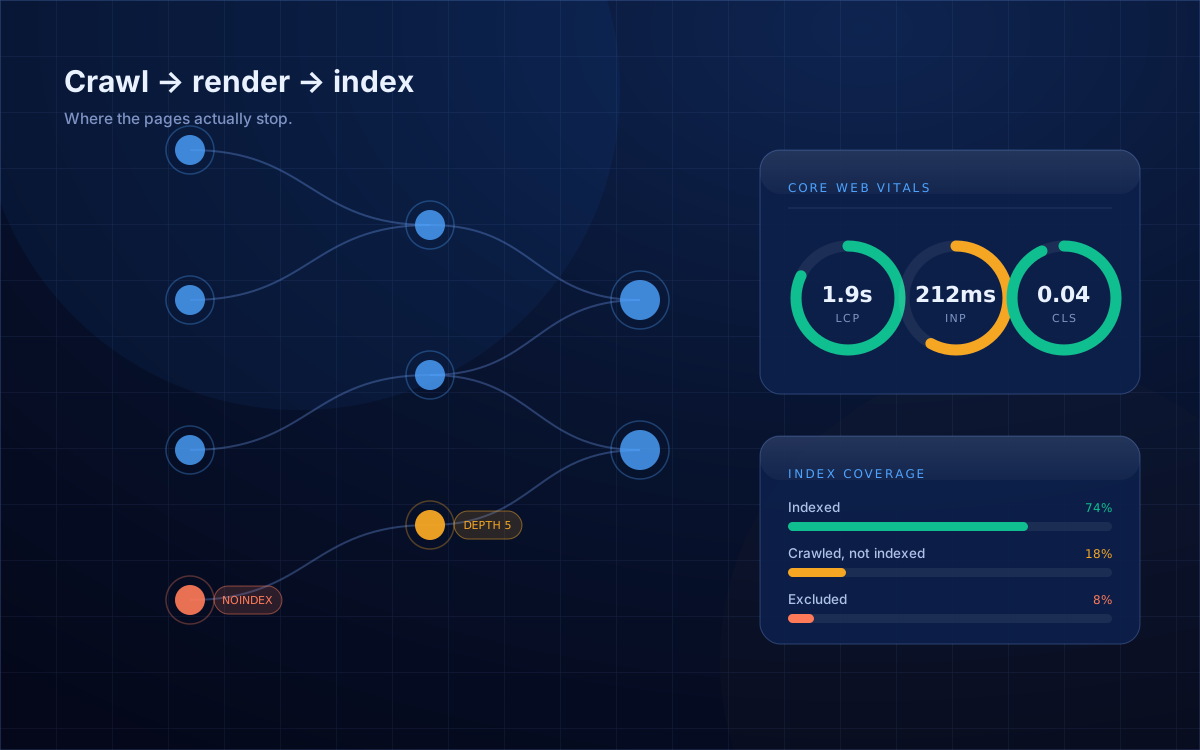
Technical SEO is unglamorous and it is usually where the biggest single wins are hiding. A canonical tag pointing at the wrong URL, a robots rule blocking a template, a JavaScript route that renders empty to a crawler — any one of these can quietly suppress an entire section of a site while every report looks normal.
We audit against what search engines actually do: crawl, render, index, rank. Then we fix in order of impact, and we hand your developers specific, implementable tickets rather than a 90-page PDF that nobody opens twice.
What's included in our Atlanta technical SEO services
No tiers where the useful work sits behind the top one. This is the scope.
Crawl & index audit
Full crawl against log files and Search Console: what gets requested, what gets indexed, and everything falling into the gap.
Core Web Vitals
LCP, CLS and INP diagnosed to the specific element and script causing them, with fixes ranked by effort against effect.
Site architecture
URL structure, internal link depth and pagination reworked so authority reaches the pages that need it.
JavaScript rendering
What a crawler sees after render versus what a browser sees — the most common cause of pages that mysteriously will not index.
Structured data
Valid, non-spammy schema for the entity types your pages actually represent, monitored for the errors Google reports later.
Redirects & migrations
Redirect map design and post-launch monitoring for replatforms, so a site move does not cost you a year of rankings.
How a technical SEO audit in Atlanta runs
The sequence matters. Doing phase three first is how budgets get burned.
Diagnose
Crawl, render check, log analysis, Search Console and field CWV data. We separate the things that are broken from the things that are merely untidy.
Prioritise
Every issue gets an impact-versus-effort score and a written ticket. You always know why an item is above another one on the list.
Fix and verify
We implement directly or work alongside your developers, then confirm each fix in the index rather than declaring victory at deploy.
When you need a technical SEO consultant
- Sites where traffic dropped with no content or link change
- Large catalogues where most pages have never been indexed
- JavaScript frameworks with rendering problems
- Anyone planning a replatform or domain migration
We work as a technical SEO agency when you want the fixes shipped, and as a technical SEO expert alongside your developers when you do not. Indexing SEO services — getting the right pages into the index and the wrong ones out — are part of both.
Not sure this is the right starting point? Tell us the problem and we will say so — including when the answer is a different service, or none of them yet.
Ask us about your site →Technical SEO in Atlanta: frequently asked questions
01What does a technical SEO audit in Atlanta include?
A full crawl checked against your log files and Search Console, a render comparison, Core Web Vitals from field data, an internal link and architecture review, and a structured data validation pass. You get every issue scored on impact against effort, written as tickets your developers can pick up.
02Do you offer schema markup and structured data services?
Yes. We implement and validate schema for the entity types your pages actually represent, and monitor for the errors Google reports weeks later. We do not add markup for things a page is not, which is the fastest way to lose rich result eligibility.
03Can you handle an SEO website migration?
Yes. Migration work means redirect map design before launch, not a rescue afterwards. We map every URL, define the redirect rules, test them on staging, then monitor indexation and rankings daily through the first weeks post-launch.
04Do you work on enterprise technical SEO?
Yes. Large catalogues are where technical work pays most, because crawl budget and template-level issues multiply across thousands of URLs. Log file analysis matters much more at that scale, and it is part of the audit rather than an add-on.
05How much do site speed and Core Web Vitals optimization cost?
It depends entirely on what is slow. A render-blocking script or unsized images is a day of work; a heavy JavaScript framework rebuilding on every interaction is a project. The audit tells you which you have before anyone quotes you.
06What is INP and why does it matter now?
Interaction to Next Paint replaced First Input Delay as a Core Web Vitals metric in March 2024. It measures how long the page takes to visually respond to a click or tap across the whole visit, not just the first interaction — so heavy JavaScript that was invisible under FID now shows up clearly.
07How long does a technical audit take?
Two to three weeks for the audit itself on most sites, longer for large catalogues where log analysis matters. Implementation depends on your development cycle; we usually ship the highest-impact fixes inside the first month.
08Do you implement the fixes or just hand over a report?
We implement wherever we have access, and write developer-ready tickets where we do not. A report you cannot act on is not a deliverable.
09My pages are indexed. Do I still need technical SEO?
Indexed is the floor, not the goal. The questions that follow are whether the right pages are indexed, whether crawl budget is being spent on them, whether they render completely, and whether the internal link graph sends authority anywhere useful. Those are usually where the ceiling is.
10Will fixing Core Web Vitals improve my rankings?
Directly, it is a modest signal and it will not rescue weak content. Indirectly, it moves conversion and engagement, and it removes an excuse Google has to prefer a competitor when everything else is close. We treat it as a tiebreaker worth winning, not a silver bullet.
Works well alongside

Local SEO
Three results sit above everything else when someone searches “near me” in Atlanta. We do the work that gets you into them — and keeps you there.
Explore Local SEO →
AI Content Engine
AI writes fast and knows nothing about your business. We use it for the parts it is good at — research, structure, first drafts — and put an editor on everything that reaches your site.
Explore AI Content Engine →
Answer Engine Optimization
A growing share of searches end in a generated answer instead of a click. AEO is the work of being the source that answer is built from.
Explore Answer Engine Optimization →Let's look at your technical SEO
Send us your site. We'll come back with what we'd actually do first — specific to your pages, not a template.
- A real audit of your site, not a template PDF
- The three fixes we'd make first, and why
- An honest read on how competitive your keywords are
- No obligation, and no pitch deck
Prefer email? hello@seoatlantaga.com