SEO content writing in Atlanta, edited by people
AI writes fast and knows nothing about your business. We use it for the parts it is good at — research, structure, first drafts — and put an editor on everything that reaches your site.
Content that ranks is edited, not just generated
SEO content writing in Atlanta has a credibility problem, and AI made it worse. Here is how we use the technology without producing the thing everyone now recognises and skips.
The failure mode of AI content is not that it reads badly. It is that it reads plausibly while being generic, unsourced and indistinguishable from what your competitors published the same week. Search engines have gotten good at spotting that, and so have readers.
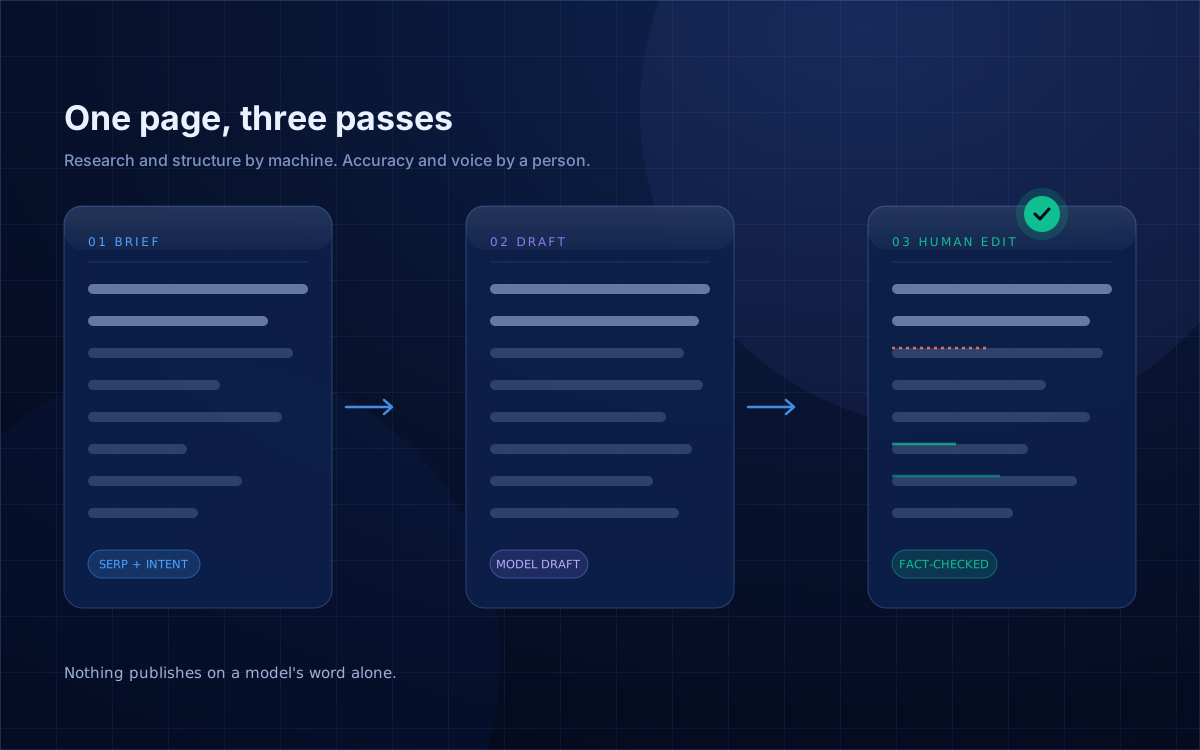
Our process treats AI as a research and drafting accelerant inside a human editorial pipeline. Every piece starts from a keyword and intent brief built on real SERP data, gets drafted with a model, then goes through a human pass for accuracy, specificity, first-hand detail and voice. What ships has something in it that only your business could have said.
What's included in our Atlanta SEO content services
No tiers where the useful work sits behind the top one. This is the scope.
Topic cluster mapping
A pillar-and-cluster architecture built from real search demand, so pages support each other instead of competing.
Data-backed briefs
Every brief carries the target intent, the questions the SERP is actually answering, entities to cover, and internal links to earn.
Accelerated drafting
Models handle the structural first draft. This is the step that turns a six-week content calendar into a two-week one.
Human edit & fact pass
An editor removes hedging, adds specifics, checks every claim, and makes it sound like you rather than like a model.
Internal linking
New pages get wired into the existing site on publish, which is the cheapest ranking lift most sites are leaving on the table.
Refresh cycles
Existing pages that have slipped get updated on a schedule. Refreshing usually beats publishing for near-term traffic.
How our SEO content agency works
The sequence matters. Doing phase three first is how budgets get burned.
Map the demand
Keyword research, SERP analysis and a gap check against competitors produces a ranked backlog — not a list of ideas, a list of pages with expected value attached.
Brief, draft, edit
Each page runs the full pipeline. Nothing publishes on a model's word alone; an editor signs off on accuracy and voice before it goes live.
Measure and refresh
We track each page against its target query, and pages that stall get reworked rather than abandoned.
Who our SEO copywriting services suit
- Sites publishing nothing because the process is too slow
- Sites publishing plenty that ranks for nothing
- Teams with subject-matter expertise but no writing bandwidth
- Anyone who tried pure AI content and watched it flatline
SEO content creation services here cover the full pipeline — research, brief, draft, edit — and an in-house SEO copywriter can plug into any part of it rather than the whole thing.
Not sure this is the right starting point? Tell us the problem and we will say so — including when the answer is a different service, or none of them yet.
Ask us about your site →SEO content writing in Atlanta: frequently asked questions
01What do SEO content writing services in Atlanta cost?
Content engagements start at $1,500 a month, which typically covers four to eight substantial pages plus refreshes of existing ones. Cost tracks research depth and subject complexity far more than word count — a technical piece needing an expert interview costs more than a straightforward service page.
02Do you offer SEO copywriting as well as blog content?
Yes. Service pages, landing pages, location pages and homepage copy are often higher-value work than blog posts, because they sit closer to the transaction. Most engagements do both: conversion copy for the money pages, and supporting content that earns the visibility.
03Can you act as our content marketing agency rather than just a writer?
Yes. That means owning the strategy — topic clusters, the publishing calendar, internal linking, refresh cycles and measurement — not just filling a brief. If you already have writers, we can run the strategy and briefs and leave the drafting with your team.
04Will AI content writing hurt my rankings?
Unedited model output usually does, because it is thin and unoriginal — which is what search engines act on, not the tool that produced it. Our process uses AI for research and first drafts inside a human editorial pipeline; every page gets a fact pass and a voice pass before it ships.
05Does Google penalise AI-generated content?
Google's guidance targets content produced primarily to manipulate rankings, regardless of how it was made. AI assistance is not itself a violation. What gets penalised is thin, unoriginal, unhelpful content — which is what unedited AI output tends to be, and which is exactly what the editing pass exists to prevent.
06Who actually writes the content?
A model produces a structured first draft from a human-built brief. A human editor then rewrites, adds first-hand specifics, verifies claims and adjusts voice. The published page is a human-edited document, and we will tell you plainly which parts of the process are automated.
07How much content do I need?
Fewer, better pages nearly always beat volume. A typical engagement produces four to eight substantial pages a month plus refreshes of existing ones. If someone is quoting you fifty posts a month, ask what they expect any single one to rank for.
08Will it sound like my business?
That is what the brief and the edit are for. We start from your existing material, your customers' actual language, and interviews with whoever knows the subject best. If a draft could have been written about any company in your category, it does not ship.
09Can you work with my in-house writers?
Yes, and it is often the best setup. We handle research, briefs and the SEO architecture; your team supplies the expertise and voice. We can run the whole pipeline or just the parts you are missing.
Works well alongside

Local SEO
Three results sit above everything else when someone searches “near me” in Atlanta. We do the work that gets you into them — and keeps you there.
Explore Local SEO →
Technical SEO
Great content on a site Google struggles to crawl, render or index is content nobody reads. Technical SEO removes the ceiling everything else is pressing against.
Explore Technical SEO →
Answer Engine Optimization
A growing share of searches end in a generated answer instead of a click. AEO is the work of being the source that answer is built from.
Explore Answer Engine Optimization →Let's look at your AI content
Send us your site. We'll come back with what we'd actually do first — specific to your pages, not a template.
- A real audit of your site, not a template PDF
- The three fixes we'd make first, and why
- An honest read on how competitive your keywords are
- No obligation, and no pitch deck
Prefer email? hello@seoatlantaga.com